
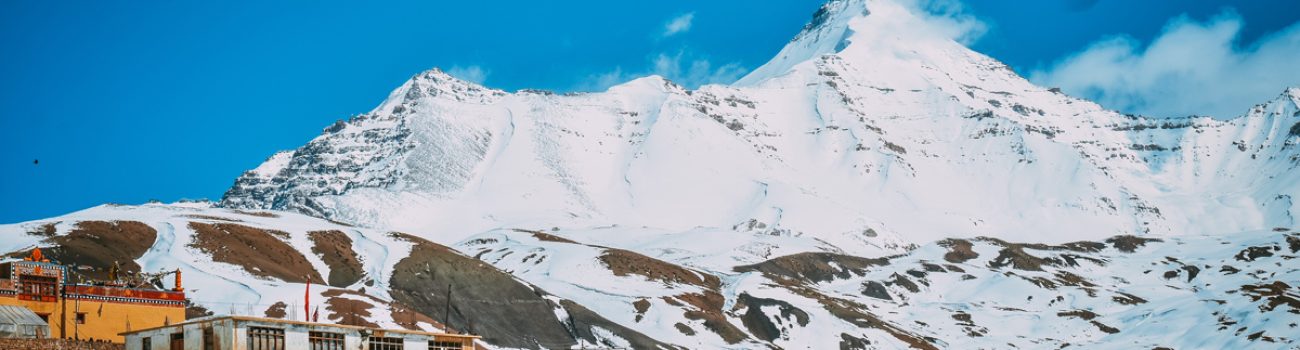
We will help you unfold the mysteries of North India as we take you through the royal romance of Rajasthan, its deserts, its colours and music, its small reclusive hamlets and bewilderingly enormous palaces, and its mouthwatering cuisine – all together create an unforgettable and colourful tapestry.
Himachal Tour (12 Nights – 13 Days)
Day 01: Arrive Delhi at Airport – Our representative will welcome you at airport and will transfer you to your respective hotel. Assistance and check-in at hotel. Dinner & overnight at hotel.
Day 02: Delhi – Chandigarh – Kasauli – After breakfast, transfer to railway station to board Shatabdi express for Chandigarh. On arrival at Chandigarh Railway Station, you will be met assisted & driven towards Kasauli, one of the most underrated Hill station in Himachal & known for its peace and quiet nature along with a wonderful View of the Valley. On arrival at the hotel, check into the hotel, Rest of the evening time you can enjoy the evening sunset view of Kasauli which is well known throughout Himachal. Dinner & overnight stay at the hotel.
About Kasauli: – Kasauli is a small hill town in the north Indian state of Himachal Pradesh. It’s home to gabled colonial-era houses, orchards and green-roofed Christ Church, dating from the mid-19th century. At the southern edge of town, Monkey Point overlooks forests of horse chestnut and Himalayan oak. A small temple also sits atop the hill. Nearby, the Gilbert Nature Trail winds through lush green countryside rich in birdlife.
Sunset Point Kasauli: – Sunset Point is a famous viewpoint in Kasauli which is located at the end of the Upper Mall road.
Day 03: – Kasauli – Local Sights – Shimla – After breakfast check out from the hotel & visit the sights of Kasauli visiting the famous Christ Church, monkey point, awesome lower and upper mall. Afterwards Driven towards Shimla. Shimla was the former summer capital of British India, set amidst the snowcapped Shivalik Mountains. which offers some of the most stunning views of the mighty Himalayas. On arrival at Shimla Hotel, check into the hotel. Overnight stay at the hotel.
Christ Church Kasauli: – The Christ Church Kasauli situated close to the bus stand, was constructed by the British family who founded the town of Kasauli itself. The church is a magnificent structure built in the shape of a cross. Set amidst a grove of chestnut and fir trees, the church offers quiet and tranquil atmosphere. Earlier the church was known by the name of Anglican Church. In the year 1970, the church was brought under the aegis of the CNI (Churches of North India). It is currently managed by the diocese of Amritsar. The Christ Church is the prime building in the centre of the heritage area of Kasauli town and as one enters the main town, this is the first building which comes to view. This church was previously an Anglican church and was founded in the year 1844,
Monkey point: – As per a legend of the Ramayana, when Lord Hanuman was returning from the Himalayas after getting the magical herb ‘Sanjivani Booti’, his foot touched Kasauli hilltop and that’s the reason this place is named as Monkey Point. This point is famous for hosting a small temple that is dedicated to Lord Hanuman
Lower and upper Mall: – The tiny hill station of Kasauli gains its importance because of the panoramic view that outlines its horizon. In addition to the eye-dazzling sight, Kasauli has a bounty of some of the rarest flora and fauna that beautify and signifies this remote hill station on the lap of the lofty Himalayan Range. The premium point of this town is The Mall which is the Centre of all kinds of get-togethers and various other events. It is the most populated part of the serene town of Kasauli and, thus, this is the place where many of the tourists and the local people too love spending time in.
Shimla: – The British Empire may have ceased to exist, but its echo lingers on in Shimla (2205m). As the Summer Capital of the British in India, Shimla was the country’s focus for the better part of every year and now, is the state capital of Himachal Pradesh. Today, it has well developed facilities, easy accessibility and numerous attractions making it one of India’s most popular hill destinations. Situated in the lower ranges of the Himalayan Mountains, it is surrounded by pine deodar, oak and rhododendron forests. Towards the north lie the snow-covered high-ranges, while the valleys breathe whispering streams and swaying fields. Within the town are host of splendid colonial edifices, quaint cottages and charming walks. Shimla offers a variety of shopping, sport and entertainment activities.
Day 04: – Shimla – Kufri – Local Shimla
Full day excursion visiting to “KUFRI” India’s one of the best holiday paradises Kufri in Shimla is beautifully tucked on an altitude of 2,622 meter, via green valley, wild flower hall, Indira Holiday home and Fagu” Evening free to stroll in the famous shopping place of Shimla town – “The Mall & THE RIDGE” This large open space in the heart of town presents excellent views of the mountain ranges. Shimla’s landmarks – the neo-gothic structure of Christ Church and the neo – Tudor library building -are worth seeing. Overnight Stay at hotel.
Kufri: – Kufri is a tiny hill station located near Shimla. It is famous for its trekking and hiking trails. Adventure-seeking travelers throng Kufri in the winters to enjoy skiing and tobogganing along its snow-covered slopes.
Green Valley: – Also known as the Hassan Valley, Green Valley in Shimla is one of the most popular tourist attractions in Himachal Pradesh. It is about 2200 to 2500 metres above sea level. The area features dense evergreen Deodar forest which is actually water catchment of nearby wildlife sanctuary in Shimla.
Fagu: – It is known for its apple plantations, sowing fields and the snow-covered Himalayas in the backdrop. Since it is secluded, Fagu is a honeymooner’s heaven. It also popular amongst trekkers and naturalists.
Mall Road/ Ridge: – Mall Road is the major hangout point and shopping center in Shimla, the capital city of Himachal Pradesh, India. Constructed during British colonial rule, the Mall road is located a level below The Ridge.
Christ Church: – Built in the neo-Gothic style in 1857 to serve the largely Anglican British community in what was formerly called Simla, Christ Church is situated on The Ridge. It stands out as one of the prominent landmarks of Shimla and its silhouette is visible for many kilometres around the vicinity of Shimla city. Christ Church is one of the enduring legacies of the British Raj.
Christ Church was designed by Colonel J. T. Boileau in 1844, and the cornerstone was laid on 9 September 1844 by Bishop Daniel Wilson, Bishop of Calcutta. The church was consecrated on 10 January 1857 by Bishop Thomas Daltrey, Bishop of Madras. The estimated cost of construction at that time was 40,000 to 50,000 Rupees. The clock adorning Christ Church was donated by Colonel Dumbleton in 1860. The porch was added in 1873. A British manufactured pipe-organ was installed in 1899 which was extensively renovated in 1932.
Tudor library building: – One of such British-era buildings on the Ridge is an example of Neo-Gothic tudor-style building known as the State Library. The unique architecture and design of such buildings in the backdrop of the hill make them stand apart and impart an irresistible charm of an English town.
Day 05: – Shimla – Manali – Via – Kullu – Valley — After breakfast leave for Manali, on the way sight-seeing like Sundernagar lake, Pandoh dam, Vaishno Devi Temple, Kullu and overnight stay in Manali.
Sundernagar Lake: – Sunder Nagar was formerly a Princely state known as Suket. The town is famous for the man-made lake which was formed due to the water of the Beas River being diverted from Pandoh. The town is famous for its temples with the Mahamaya Temple being the prominent among them.
Pandoh Dam: – The dam was commissioned in 1977 and its primary purpose is hydroelectric power generation. Part of a run-of-the-river power scheme, it diverts the waters of the Beas to the southwest through a 38 km (24 mi) long system of tunnels and channels.
Kullu: – Kullu (1220m) was once known as Kulanthapitha– the end of the habitable world. Beyond rose the forbidding heights of the Greater Himalaya and by the banks of the shining river Beas lay the fabled Silver Valley. Kullu got its first motorable access only after independence. The long centuries of seclusion have however allowed the area to retain considerable measures of its traditional charm. Here is the core of an intricate web of numerous valleys, each of which is a visual delight and seems more beautiful than the other. The Silver Valley has nature’s treasures that lie carelessly scattered as flowers. This wealth nestles by every tree in the splendid forests, bursts forth in the blooms and in the fruit of every orchard. Here are riches which cannot be measured and echo down the ages with the words of every myth and ancient legend and glow in the warm smiles of its gentle people. There is pleasure in every step you take in these enchanted valleys and in every gurgle you hear in the clear mountain streams
Vaishno Devi Temple: – Vaishno Devi Temple in Kullu Himachal Pradesh is situated on the banks of the Beas River. Named after the wife of Lord Shiva, Parvati, the magnificent temple was built in the year 1966 by a saint named Swami Sewak Das Ji Maharaj.
Manali: – It is a rustic enclave known for its cool climate and snow-capped mountains, offering respite to tourists escaping scorching heat of the plains. The tourism industry in Manali started booming only in the early 20th century, mainly because of its natural bounties and salubrious climate.
Day 06: – Manali – Local – Manali – After breakfast Local sightseeing of Manali “HADIMA TEMPLE” Built in 1553 with a superbly crafted four tiered pagoda roof, it is famous for its exquisitely carved doorway . “CLUB HOUSE” The Club House with its comprehensive facilities that include a roller skating rink, an auditorium, billiards rooms, a library, a bar and restaurant makes wonderful outing for the day.” Tibetan Monastery, Van Vihar, and “VASHIST” Well known for its hot springs. There are old temples dedicated to the sage Vashisth and to Lord Rama. Overnight stay at hotel in Manali.